Showing posts with label monroe street cleveland. Show all posts
Showing posts with label monroe street cleveland. Show all posts
Wednesday, March 27, 2013

Sunday, March 24, 2013
open zinker

Thursday, March 21, 2013

Monday, March 18, 2013
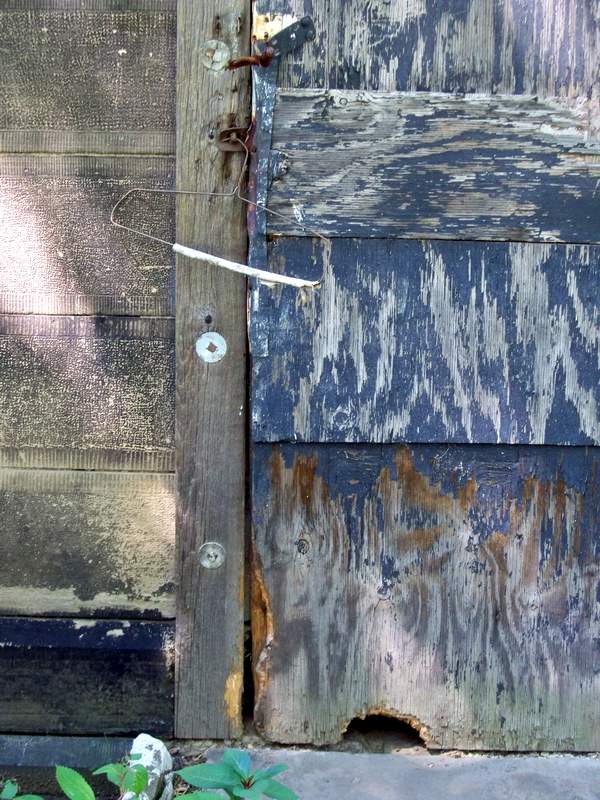
varmint hole

Tuesday, February 5, 2013

Monday, February 4, 2013

Monday, January 28, 2013

Thursday, September 6, 2012
Anna Kammel

Anna Kammel
geb. 4. Sept. 1884.
gest. 14. Jan. 1891.
Schmerzlich war dein frühes Scheiden
Ach wohl bitter war dein Tod
Doch erlost von allen Leiden,
Und befreit von aller Noth
Painful was your early separation
As well was your bitter death
But release from all sufferings,
And exempt from all trouble
This stone is shaped like a pillow. Death is symbolised as a peaceful sleep. Again, and again, one can read the sadness and longing of the loved ones who lost their loved one.
Wednesday, September 5, 2012
Sunday, September 2, 2012
Addeline Pelton Consort

Sacred To The Memory of
Mrs. Addeline Pelton Consort
of Mr. H. Pelton who Departed
This life Oct.. 2 1827 in the
22 year of her Age
_______ . _______
Benevolent She Lived Virtuous She Died.
Now Lies at Rest Her Infant by Her Side.
_______ . _______
Yet Oh! Dear wife thy Spirit Lingering. Near,
will Listen to thy husbands lonly tread:
And watch the Silent lonly pensive tear:
which Drops to Consecrate thy Dreamless bed.
 Monroe Street Cemetery was bought by Brooklyn township in 1836, it had been a graveyard since c.1818. Ohio City was incorporated in 1836, after the building of the Ohio Canal and the population was c. 2,400. In 1854 Ohio City became part of Cleveland, and the cemetery became the city's only west side cemetery until a second one opened in 1900.
Mrs. Pelton and child was one of the earlier burials. Her sandstone inscription is as clear as if it was written to-day, only the writing style is mot familiar to-day. The marble stones to the right have every letter worn, and most gone.
The top of the stone has a funeral urn, and weeping willow branches carved onto the scroll and pediment topped stele. I think this may be the only such stone in this cemetery. This style was popular for generations, but this was in the last generation they were made. The funeral poem added to the epitaph was also hearkening to an earlier age. The use of the word 'consort' is interesting instead of 'spouse'.
There are few such stones at Erie Street Cleveland, but the last is c. 1832. It is to remembered that the settlement of Cleveland, and Ohio City was initially of New Englanders. Correct me here if necessary, the entire stone is anachronistic, or perhaps, it was the acme of development for this funereal art style; and after reaching that, then ended. Some stones had just the urn, or just the willow branches. Both speak to the mourning of the survivor. Mr. Pelton appears to have grieved deeply.
Saturday, September 1, 2012
gatehouse roof and door
 OFFICE HOURS
8:oo A.M. To 5:oo P.M.
CLOSED
SUNDAYS & HOLIDAYS.
It has not not done been opened at all, for a long time.
 it's raining and the roof is...
The gatehouse at Monroe Street Cemetery has not received much care, as of late. See.
Friday, August 31, 2012
August Birth
 Birth is not the name one expects to see on a gravestone. Sometimes spouses have the same Christian names too. August & Augusta, Stanisław & Stanisława.
 Ojciec=Father .... Matka=Mother
Prosza Ozdrowas Marya
Pray for us Mary
Thursday, August 30, 2012
213 Franklin Street
 Delamater family monument. Monroe Street Cemetery. Cleveland, O.
 There are four faces inscribed with eight names. Three sides are filled. The earliest family member was born in 1819, the last one memorialised in 1876. The last died in 1943.
The face above is the most detailed in information, and reads:
Addie Hale,Now, i am not a genealogist. The Delamater surname does not have the greatest frequency in America. My guess is pre-independence New York Dutch. The paterfamilias was Edward, his son Edward was born in Cleveland on 1 January 1856. From this sketch, the family moved a few times between New York, Wisconsin, and Cleveland (at least). A poor family would not have the money for such a central monument.
Delamater
Born Aug. 8, 1865.
in Janesville Wis.
Died Mar. 15, 1872.
at 213 Franklin St.
________________
Mary Girtie,
Delamater
Born May 30, 1862.
in Janesville Wis.
Died Sept. 5, 1863.
at Amsterdam N.Y.
Here's a point—we are born, often have family lives, and sometimes the family continues; other times, a line ends. I apologise to any Delamaters, i do not know the circumstances, i am positing an example of some familial histories. This transience is a poignant marker of our existences upon this earth. These are things to ponder as Hamlet pondered on the skull of Yorick.
But, in this stone a street address was listed. Why did they think that necessary? To-day there is both Franklin Avenue (no houses), and Franklin Boulevard. Franklin was the prestige street in Ohio City, which merged into Cleveland in 1854. In 1906, the names and numbers of streets were revised throughout the city. In recent years, several houses on Franklin Boulevard were renovated and restored.
Monday, August 20, 2012
Rollers
 These are called 'bolsters' by some as they look like a sofa pillow. Some times they are set in a cradle, or rack. Some call them 'rollers', because they roll. These did.
Sunday, June 3, 2012
Gross Mutter
 the dessicated maple leaf was there
Monroe Cemetery Cleveland i find interesting, more so than most. There are many Germans buried there. In the XIXth century they did not feel prohibited in writing in their native tongue.
Not all were flush in funds, but wanted memorials for their dead. And to-day, in America, the poor are hated in such away that proper company does not allow them, and their concerns, to be spoken of; if one does, one is barraged with taunts of 'socialist' or worse. It is not that 'socialist' is a bad term (or concept) at all, but those throw it impugn repugnant and calamitous implications, connotations, and pure venom.
The one supra was made standard. 'Mutter' was ready in the store, 'Gross' was added. The name was not cut. Maybe the money was not there, and modest was acceptable, and still had dignity. Germans like long words, compound words; but English has 'grandmother' as one, Deutsch hat hier 'Gross Mutter' als zwei. But now, Germans spell it 'Großmutter'. I do not remember seeing double s with 'ß' there.
 Gross Mutter was in her 60s. Gertrude was a child. It looks money did not allow an immediate stone for Grandmother, and in the meantime the girl died, and money for two stones was not there. Altmann is a Germanic name, Wachowiak a Polish name, but it is not unusual for a nation have others acculturate into. Sometimes from generations past, so only the spelling suggests a different nation.
Monday, April 16, 2012
Otec
 'Otec' is not a surname. It is Czech (and Slovak) for 'Father'. The distaff is 'Matka'. Supra is a bolster stone in Monroe Street on the west side of Cleveland, next to it is an hedge apple, on top of it is squirrel shredded hedge apple. Infra is a stone at Woodland on the east side of Cleveland. There were Czech neighbourhoods close to each, and both have many Czech burials. This is an English language essay, and many of those who would read it would only be conversant in English. The inscriptions in most languages say similar stuff.
 Zde odpočiva Tomas Můžik · Here rests Tomas Mužik
Nar[odený] 18 Pros[inec] 1832 · Born 18 December 1832
Zem[řel] 20 Řina 1903 · Died 20 October 1903
Spi Sladce · Sleep Sweetly
Tuesday, December 20, 2011
Bases alone
 The ravages of time, neglect, and malice cause ruins. People bury their loved ones with a thought of dignity, and remembrance. That dignity, and remembrance is meant to last for more than a moment; often it is meant to outlast all the survivors of those whom are buried. That is why the date of death is recorded with the name.
These stones have only the bases remaining. So, we see the construction. The left one is for a stone that is slotted into a base. That stone is tabbed on its bottom. The right one has two posts, or spikes that connect marker stone with the base.
Monday, December 19, 2011
Handshakers
 Again, certain visual symbols are seen upon stones. In certain time periods, some have a greater frequency. The period (1865-1914), i address, is that of the post War for Union, and ante the War to end all Wars. One is that of two hands shaking. Hand shaking is a visible sign of greeting by friends, or those wish to be seen as such.
 Now, some hand shaking shows up with fraternal organisations. This is one on a married couple. The clothing cuffs are different to suggest one is feminine, and one masculine. Now, in some churches a sign of peace is exchanged; often it is a hand shake with strangers. Somehow a handshake does not seem the sign of affection for a married couple. Well, perhaps we are fortunate that here it is an euphemistic symbol, and not anatomical accuracy that is portrayed.
Saturday, December 17, 2011
By the fence
 This grave has a newborn babe, and her newborn kid brother. The stone came two (?) years after the first child's death. It is a small, dignified stone sitting for almost a century.
Grand funerals are not had by all. The poor die too. This foto tells us several things, some by reconfirmation: by the fence is not a good spot; sometimes, it is less maintained; the property next to it may not be so good. It is no surprise to see the the poor are buried by the fence.
This spot is in the southeast corner of Cleveland's Monroe Street Cemetery. The ground slopes downward to railroad tracks. The tracks are the southern property line, and they make almost a 'v', so that the line is not parallel to Monroe Street. Along this fence, there are several gaps. Over the years, children and bums have made their way through. Next to this stone, there is an animal hole. The southern third, or fourth of the graveyard is almost riddled with such burrows.
Friday, November 25, 2011
Grave bird
 This turkey vulture at Lake View was not soaring and circling. He was hopping into flight, resting and hopping. Perhaps he was mouse hunting. Ironic thoughts rush to the mind when the eyes see a vulture in graveyard.
 Some goofy, third age paganism, will give an absurd, abstract interpretation for a vulture. It is a bird that rips the flesh of the already dead. It is a scavenger. It is nature's consumer of death and rot. When a person is compared to a vulture, he is a remorseless opportunist. It is difficult to be cheery about the sight of this bird. His featherless head allows him to delve into the corpse with little gore to adhere. As a defense he pukes. His digestive slobber adds to the stench.
Fancifully, the bird can be taken as an undertaker's companion. Somewhere there are sketches of a gravedigger holding a shovel, and the bird perched on his shoulder like the parrot on Long John Silver; but that was meant as gruesome humour.
 One walking through a graveyard one doesn't usually smell the decay of flesh. On this day, there was a dead buzzard on the ground. Some creature did dig in his carcass [note the disturbed feathers]. Considering that his food is carrion and putrid flesh, it would seem to poison one would not be easy. He could have been shot.
Subscribe to:
Posts (Atom)