Friday, September 7, 2012

Tas kungs ir mans Gans

Tas kungs ir mans Gans = The Lord is my Shepherd

Cleveland Riverside has a Latvian section, and a Belarus section. Cleveland has had a long standing population originating in the nations of eastern Europe.

Latvians are a Baltic people. Most of the Letts came under Swedish rule and Lutheranism in the 17th Century. The stone, supra, has folk designs and a Protestant cross.


Thursday, September 6, 2012

Anna Kammel


Anna Kammel

geb. 4. Sept. 1884.
gest. 14. Jan. 1891.

Schmerzlich war dein frühes Scheiden
Ach wohl bitter war dein Tod
Doch erlost von allen Leiden,
Und befreit von aller Noth

Painful was your early separation
As well was your bitter death
But release from all sufferings,
And exempt from all trouble

This stone is shaped like a pillow. Death is symbolised as a peaceful sleep. Again, and again, one can read the sadness and longing of the loved ones who lost their loved one.

Wednesday, September 5, 2012

securely shut

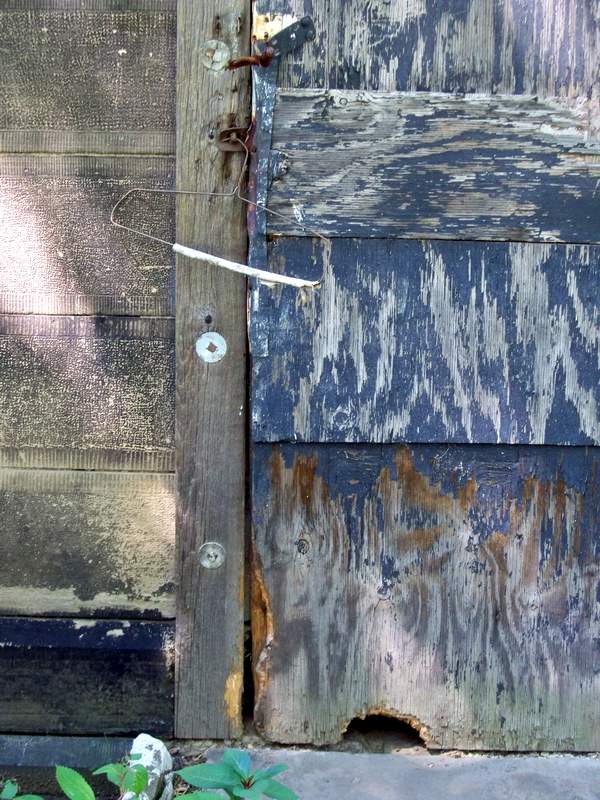
This mausoleum door is pinned and clasped shut.

Tuesday, September 4, 2012

White Russians

Byelorussian Autocephalic Orthodox Church in Cleveland has a section at Riverside Cleveland. In the background is the Jennings Freeway, steel mill, and a shopping center carved from the steel mills.

The current Latin spelling is 'Belarus', White Russia. There are four eastern Slavonic nations, each sometimes having a variation of 'Russian', although Ukraine isn't currently favoring the identification. Great Russia=Red Russia (this is a pre-communist era term)=the Russia everyone thinks about. Little Russia=Black Russia=Ukraine. White Russia=Belarus. Carpatho-Russia=Ruthenia.

The centerpiece is a monument recalling the discovery of a small Marian icon of stone at Zyrovicy (Жыро́вічы, Zhirovichi) in 1470. Shepherd boys found a pear tree glowing, and the glow was from the oval icon.


"More honorable than the cherubim, And more glorious beyond compare than the seraphim, In virginity you bore God the Word; True Mother of God, we magnify you."

Monday, September 3, 2012

Kasimir Reichlin


Rev. Casimir Reichlin
Rector of
St. Stephen's Church
Cleveland, O.
1843 — 1870 — 1917

† Requiescat in Pace †

Father Reichlin is buried in the Priests' Circle, next to Bishop Koudelka. One can see where one of Koudelka's sheep is legless.

Usually, a simple inscription on a grave marker has only two dates. This one has a birth date (1843), and a death date (1917), and one more. The middle date is 1870, when Father Reichlin became rector. Rector is equivalent to pastor, rector comes from the Latin 'regere' to rule. Now, the term used is pastor.

His pastorship ended with his death, that was not unusual. A later pastor of St. Stephen's was told, "Our pastors don't retire, they die". Reichlin was given the newly formed parish at ordination, it was the second German parish on the city's west side.

The first was St. Mary of the Assumption, who bought the land for St. Mary's Cemetery. St. Mary's was given to the Jesuits in 1945, and twinned with St. Patrick's. German born Jesuits had built St. Ignatius [Loyola] (now High School). American born Irish replaced them. The last parish Mass at St. Mary's was in 1959. It continued as the school's chapel. In 1968 the church was razed. The ethnic rivalry has really not ended. Recently, Cleveland's bishop, Richard Lennon tried to 'merge' St. Stephen's with neighboring St. Colman's at St. Stephen. This caused an uproar. Colman's was quickly saved through a heavy, and immediate campaign, as was St. Ignatius of Antioch. St. Stephen's continues to exist by the grace of God. Both parishes are officially on probation, two of three such [the third is St. Ignatius].
The Father welcoming the Prodigal Son window was created by Munich's Mayer company, and installed in 1906. The window's sponsor was the Swiss born pastor Kasimir Reichlin.

Sunday, September 2, 2012

Addeline Pelton Consort

Sacred To The Memory of
Mrs. Addeline Pelton Consort
of Mr. H. Pelton who Departed
This life Oct.. 2 1827 in the
22 year of her Age
_______ . _______
Benevolent She Lived Virtuous She Died.
Now Lies at Rest Her Infant by Her Side.
_______ . _______
Yet Oh! Dear wife thy Spirit Lingering. Near,
will Listen to thy husbands lonly tread:
And watch the Silent lonly pensive tear:
which Drops to Consecrate thy Dreamless bed.
Monroe Street Cemetery was bought by Brooklyn township in 1836, it had been a graveyard since c.1818. Ohio City was incorporated in 1836, after the building of the Ohio Canal and the population was c. 2,400. In 1854 Ohio City became part of Cleveland, and the cemetery became the city's only west side cemetery until a second one opened in 1900.

Mrs. Pelton and child was one of the earlier burials. Her sandstone inscription is as clear as if it was written to-day, only the writing style is mot familiar to-day. The marble stones to the right have every letter worn, and most gone.

The top of the stone has a funeral urn, and weeping willow branches carved onto the scroll and pediment topped stele. I think this may be the only such stone in this cemetery. This style was popular for generations, but this was in the last generation they were made. The funeral poem added to the epitaph was also hearkening to an earlier age. The use of the word 'consort' is interesting instead of 'spouse'.

There are few such stones at Erie Street Cleveland, but the last is c. 1832. It is to remembered that the settlement of Cleveland, and Ohio City was initially of New Englanders. Correct me here if necessary, the entire stone is anachronistic, or perhaps, it was the acme of development for this funereal art style; and after reaching that, then ended. Some stones had just the urn, or just the willow branches. Both speak to the mourning of the survivor. Mr. Pelton appears to have grieved deeply.

Saturday, September 1, 2012

gatehouse roof and door

OFFICE HOURS
8:oo A.M. To 5:oo P.M.
CLOSED
SUNDAYS & HOLIDAYS.

It has not not done been opened at all, for a long time.
it's raining and the roof is...

The gatehouse at Monroe Street Cemetery has not received much care, as of late. See.